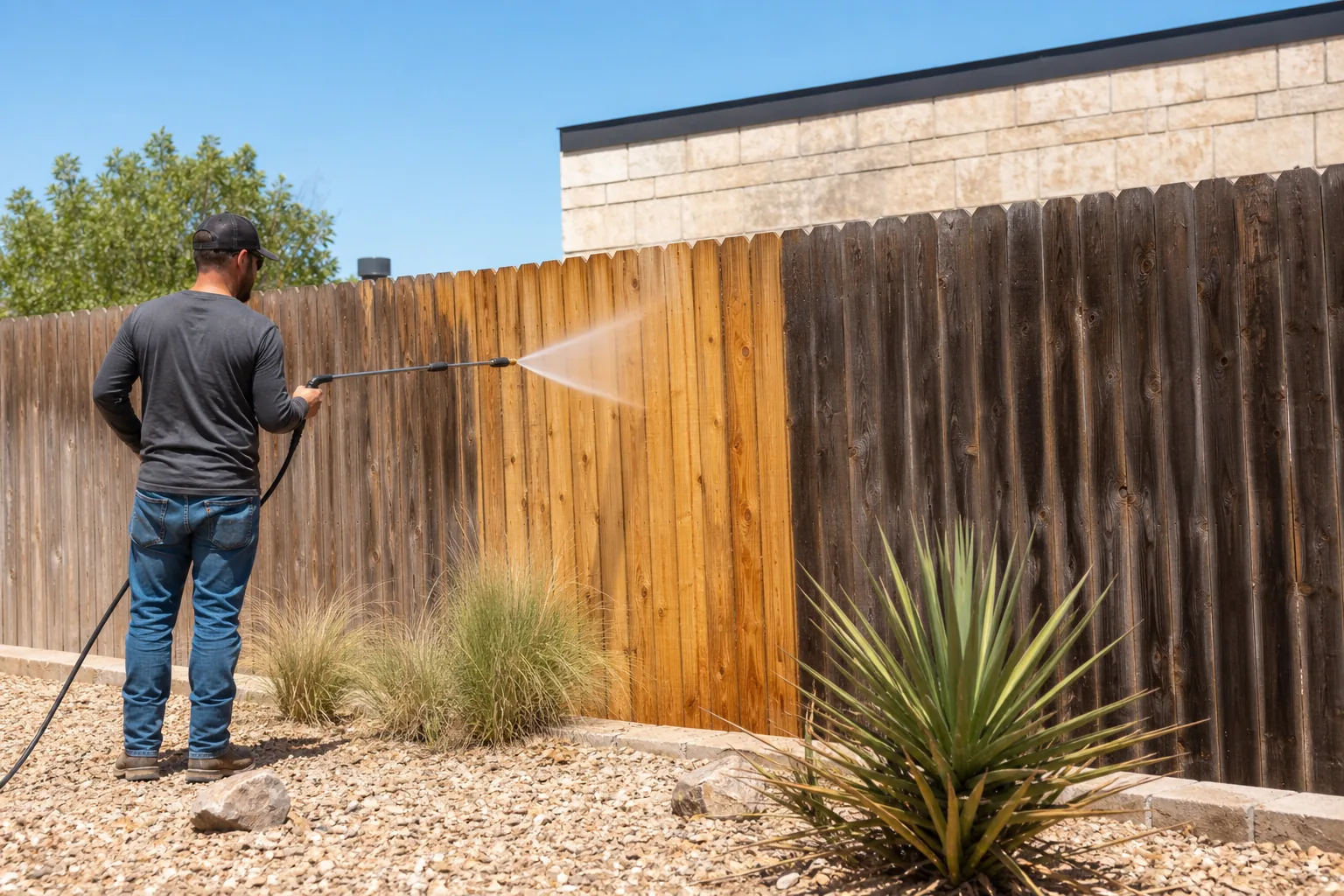
Fence and deck cleaning sits between routine washing and surface preparation. The right process depends on wood species, age, grain, coating, fasteners, condition, and what will happen after it dries.
Why wood is easy to mark
Soft spring growth can erode faster than dense grain under a concentrated spray. Excess pressure or a narrow nozzle can leave stripes, gouges, raised fibers, and a fuzzy surface. Holding the wand too close at board ends can cause splintering, while inconsistent passes create color bands.
West Texas sun also dries and weathers exposed wood. Gray color may be surface weathering rather than dirt. Cracks, checks, warping, and faded stain are material or coating conditions that cleaning does not reverse.
Inspect the full assembly
Check loose boards, protruding nails or screws, rot, failed rails, unstable steps, splinters, cracked posts, and previous repairs. Identify whether the wood is bare, painted, stained, or sealed. Test an inconspicuous area because old coatings may release unevenly.
Nearby stucco, stone, metal, plants, pool equipment, outdoor kitchens, and neighboring property also affect the cleaning plan. Both sides of a fence may require access permission and protection.
Use chemistry and pressure deliberately
A suitable wood-cleaning solution, controlled dwell time, gentle agitation where needed, and a broad rinse can loosen buildup without relying on high impact. Work with the grain, maintain consistent distance, and avoid stopping the spray in one place. More pressure is not the correction for insufficient dwell time.
Evaluate uniformity only after the surface has dried. Drying time varies with shade, airflow, board thickness, weather, and the next coating system.
Know what cleaning changes
Cleaning can remove dirt, organic buildup, and some surface graying, but boards may remain different colors because of age, species, exposure, knots, prior stain, repairs, and weathering. A dark board is not always dirty; a light board is not always clean.
Some restoration systems include brightening or neutralizing steps after cleaning. These are different from routine washing and should be coordinated with the intended finish. Old paint or solid stain may need scraping, sanding, or other preparation beyond cleaning.
Coordinate cleaning with the next finish
- Choose the stain, sealer, or paint system before defining preparation.
- Follow the coating manufacturer’s moisture and surface-preparation requirements.
- Allow adequate dry time instead of coating by the calendar alone.
- Replace unsound wood and reset fasteners before final finishing.
- Keep irrigation from repeatedly wetting the finished surface.
If no coating is planned, gentle cleaning still improves appearance, but bare wood will continue weathering. A realistic scope should say whether the goal is maintenance cleaning, restoration preparation, or simple removal of organic buildup.
Planning care for a fence or deck?
Explore fence & deck cleaning