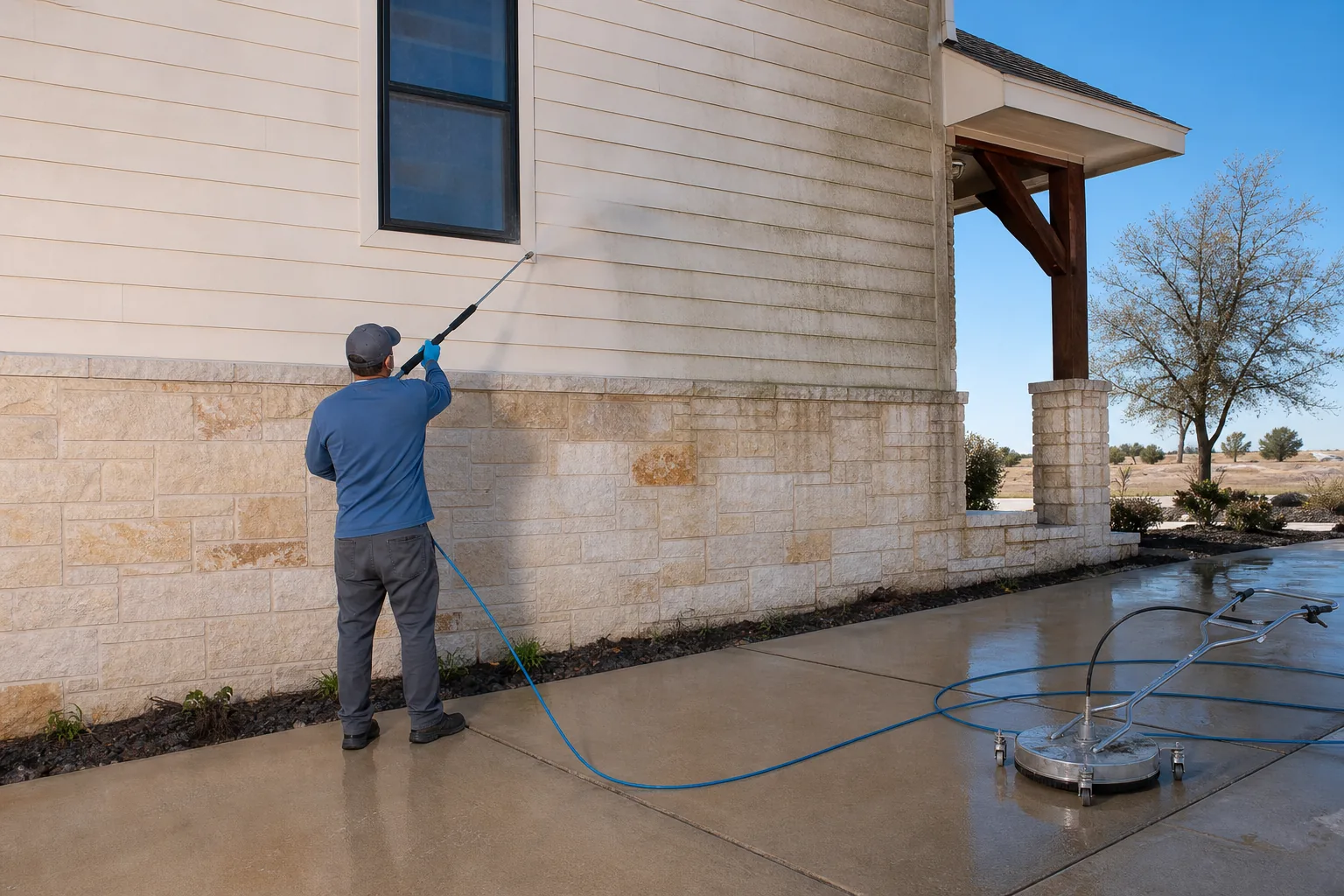
Soft washing and pressure washing are not competing labels for the same process. They are different ways to combine water, cleaning solution, dwell time, agitation, and rinsing.
The core difference is force
Pressure washing relies more heavily on water velocity and mechanical impact. Soft washing uses low-pressure application and rinsing while an appropriate cleaning solution does more of the work. A professional may use both during one visit: low pressure on siding and higher, controlled pressure with a surface cleaner on durable concrete.
Pressure is only one variable. Nozzle choice, distance, flow, temperature, chemistry, surface condition, and operator technique all affect the outcome. The highest setting is rarely the most thoughtful setting.
Where soft washing fits
Soft washing is generally the better starting point for painted siding, stucco, EIFS, asphalt shingles, and other surfaces that can be scarred, saturated, or forced loose. It is especially useful when the buildup is organic—such as algae, mildew, or similar growth—because treatment addresses the source rather than merely drawing a clean line through it.
Cleaning solutions still need correct dilution, controlled application, plant protection, suitable dwell time, and a thorough rinse.
Where controlled pressure fits
Sound, uncoated concrete and some masonry can usually tolerate more mechanical cleaning. A rotary surface cleaner distributes spray evenly and helps avoid stripes. Detail work around edges, joints, curbs, and steps may use a wand at a deliberate distance. Even on concrete, excess pressure can expose aggregate, deepen existing defects, or leave permanent lines.
Wood is not “hard surface” shorthand. Cedar and other soft woods can fuzz or splinter under aggressive spray. Brick can have soft mortar. Older coatings may already be failing. A test area and inspection matter more than a generic material label.
Choose the method by surface and soil
- House siding and stucco: low-pressure cleaning, with attention to oxidation, loose paint, vents, and openings.
- Asphalt shingles: roof-specific soft washing; never use aggressive pressure as a shortcut.
- Concrete drives and walks: controlled pressure, often paired with pretreatment or stain-specific treatment.
- Fences and decks: gentle technique based on wood species, age, coating, and the planned finish.
- Commercial facades: method changes across glass, metal panels, masonry, signs, sealants, and sidewalks.
Questions worth asking
Ask what method will be used on each material, how fragile areas and landscaping are protected, and whether specialty stains are included. A clear scope should distinguish general cleaning from restoration, paint correction, stain removal, or repair.
The practical rule is simple: identify the material, identify the buildup, inspect existing condition, and then select the least aggressive effective process.
Planning exterior cleaning for a home?
Explore house washing