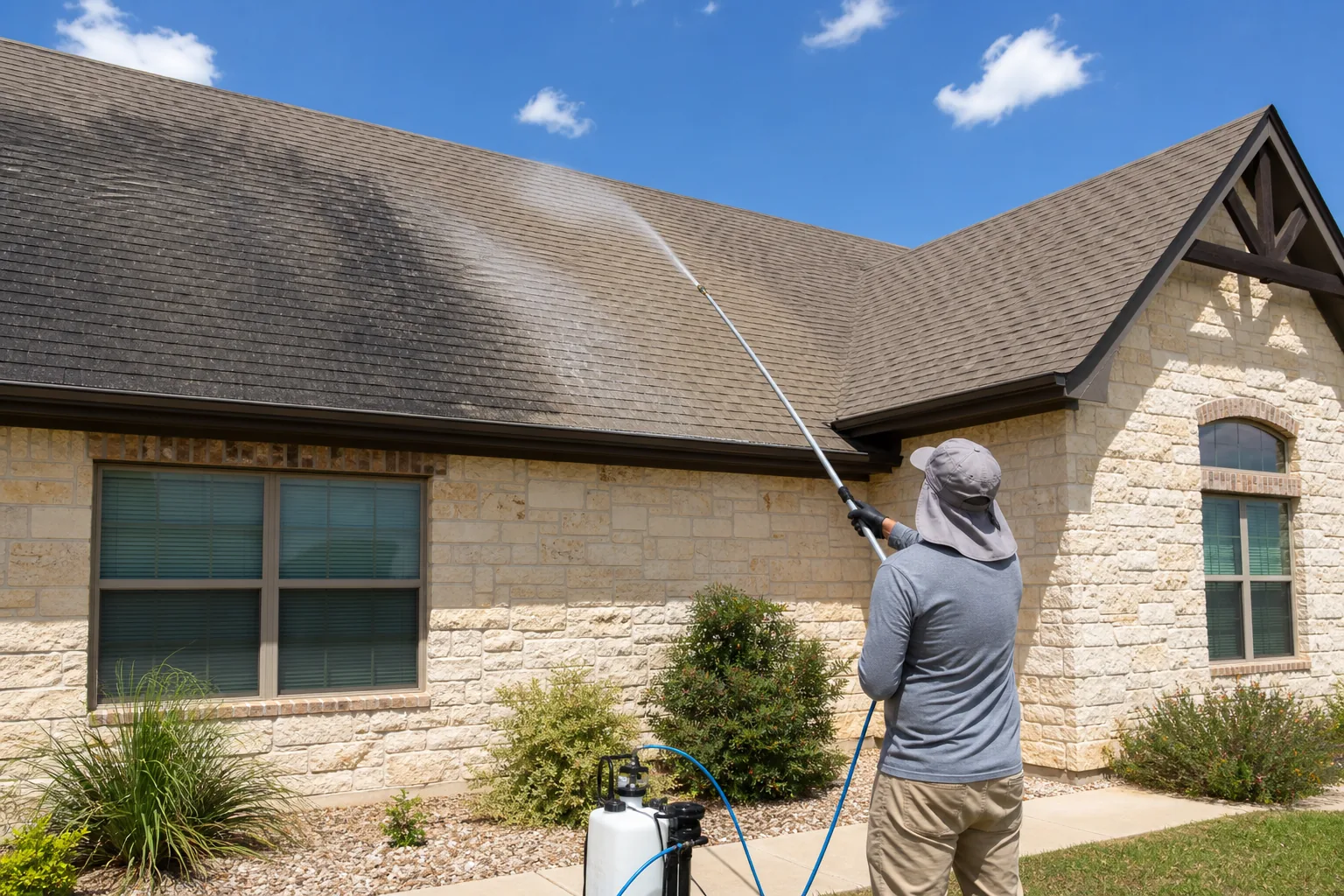
A roof is a weather system, not just another exterior surface. Cleaning must respect shingles, flashing, sealants, gutters, drainage, landscaping, and the manufacturer’s care guidance.
Why dark streaks form
On asphalt shingles, dark streaking is often associated with algae or other organic colonization that follows moisture patterns and spreads over time. Shade, roof orientation, nearby trees, drainage, and local microclimates influence where it appears. Dust and airborne residue can also contribute to a dirty, uneven look.
Not every dark area is growth. Granule loss, exposed substrate, repairs, shadowing, moisture damage, or material aging can resemble staining from the ground. Those conditions need evaluation rather than cosmetic treatment.
Why high pressure does not belong on shingles
Asphalt shingles rely on a protective granule surface and overlapping installation. Aggressive spray can dislodge granules, lift edges, force water beneath the assembly, and create visible wand marks. Removing the dark color by mechanical force does not make that risk acceptable.
Leaks, loose or missing shingles, flashing defects, soft decking, and structural concerns belong with a qualified roofing professional before cleaning.
How roof soft washing works
A roof-specific soft-wash process applies an appropriate cleaning solution at low pressure so treatment—not impact—addresses the organic material. The plan includes controlled application, careful coverage, runoff management, protection for sensitive landscaping and metals, and a rinse strategy suited to the roof and conditions.
Results may continue to change after application as treated residue releases through normal weather. Heavy growth can require a staged approach. A responsible provider should explain the expected timeline instead of promising an instant, uniform “new roof.”
What should be checked first
- Roof material, age, pitch, access, and visible condition
- Loose, curled, broken, or missing shingles
- Flashing, vents, skylights, solar equipment, and repairs
- Gutters, downspouts, drainage routes, and rainwater systems
- Nearby landscaping, painted metal, natural stone, and sensitive surfaces
- Manufacturer warranty or maintenance requirements
Some roofs should not be cleaned until defects are corrected. Some materials—such as metal, tile, or specialty roofing—need a process different from asphalt shingles.
After treatment
Keep gutters and drainage paths functional, trim overhanging vegetation where appropriate, and monitor recurring moisture patterns. Avoid walking on treated or wet roofing. If streaks return quickly, investigate shade, drainage, and roof condition rather than simply increasing treatment frequency.
The goal is a cleaner roof reached with the lowest practical mechanical stress—not a dramatic spray demonstration.
Concerned about dark roof streaks?
Explore roof cleaning