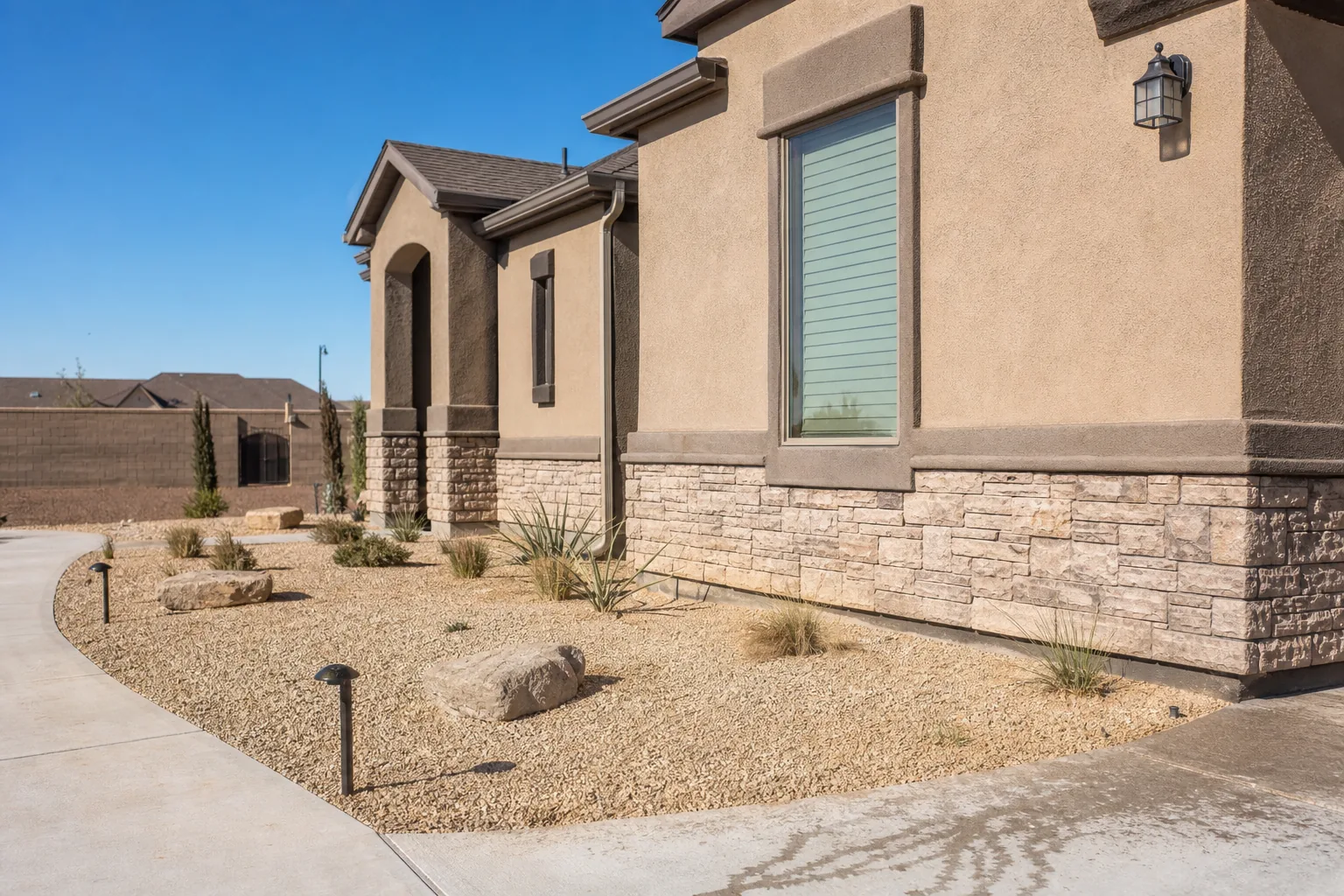
West Texas exterior care is less about fighting one dramatic season and more about managing repeated exposure: fine dust, dry wind, intense sun, irrigation overspray, and occasional organic growth where moisture lingers.
Dust does more than look dull
Fine windblown soil settles on ledges, textured stucco, window trim, fences, patios, storefronts, and sheltered entryways. When light rain or irrigation wets that layer, it can dry into a more stubborn film. Grease, vehicle residue, or organic material can bind the dust more tightly on commercial concrete and driveways.
A rinse may move loose material but often leaves the bonded layer. Effective cleaning loosens that film without scarring the surface. Highly textured walls and mortar joints may need more dwell time and careful rinsing than smooth siding.
Heat changes the cleaning window
Hot surfaces accelerate evaporation. Cleaning solution that dries before it has worked can leave uneven results or residue. Direct sun also changes from elevation to elevation, so sequencing matters: work may begin on shaded or cooler sides and move as conditions change.
Strong wind can carry mist beyond the intended area, while high heat can shorten dwell time. Rescheduling or adjusting the sequence may protect nearby property and improve consistency.
Hard-water marks are mineral deposits
When sprinkler or hose water evaporates, dissolved minerals can remain on glass, masonry, metal, stucco, and concrete. Repeated wet-and-dry cycles build a visible white or rusty film. General pressure washing may remove surrounding soil but not the mineral scale itself.
Targeted treatment may improve deposits, but the surface matters. Acids and other specialty products can change natural stone, mortar, glass, metal, and coatings. Correcting sprinkler direction or a leaking fixture is part of preventing a quick return.
Choose timing around the property
There is no universal “best month.” Consider wind, temperature, shade, landscaping, upcoming painting or sealing, tenant traffic, and how soon dust-producing work is scheduled nearby. Cleaning immediately before grading, construction, or a forecast dust event may offer less lasting value.
For businesses, early-morning or lower-traffic windows can help surfaces dry before customers arrive. For homes, a planned wash ahead of exterior coating work or outdoor gatherings may make sense, provided the surface has enough drying time.
Slow the return where possible
- Adjust sprinklers that repeatedly strike walls, windows, fences, or walks.
- Repair drainage and leaks that keep one area damp.
- Keep soil, mulch, and gravel from washing onto hard surfaces.
- Address oil and irrigation stains early before repeated heat cycles.
- Use condition-based cleaning instead of waiting for severe buildup.
Cleaning cannot stop wind or mineral content, but it can reset the surface. Small site corrections then help that result hold up better between services.
See how local conditions affect service planning.
Explore our service area