Concrete looks solid, but it is porous. Liquids and pigments can enter its capillaries, which is why two marks that look similar on top can clean very differently.
What standard concrete cleaning does
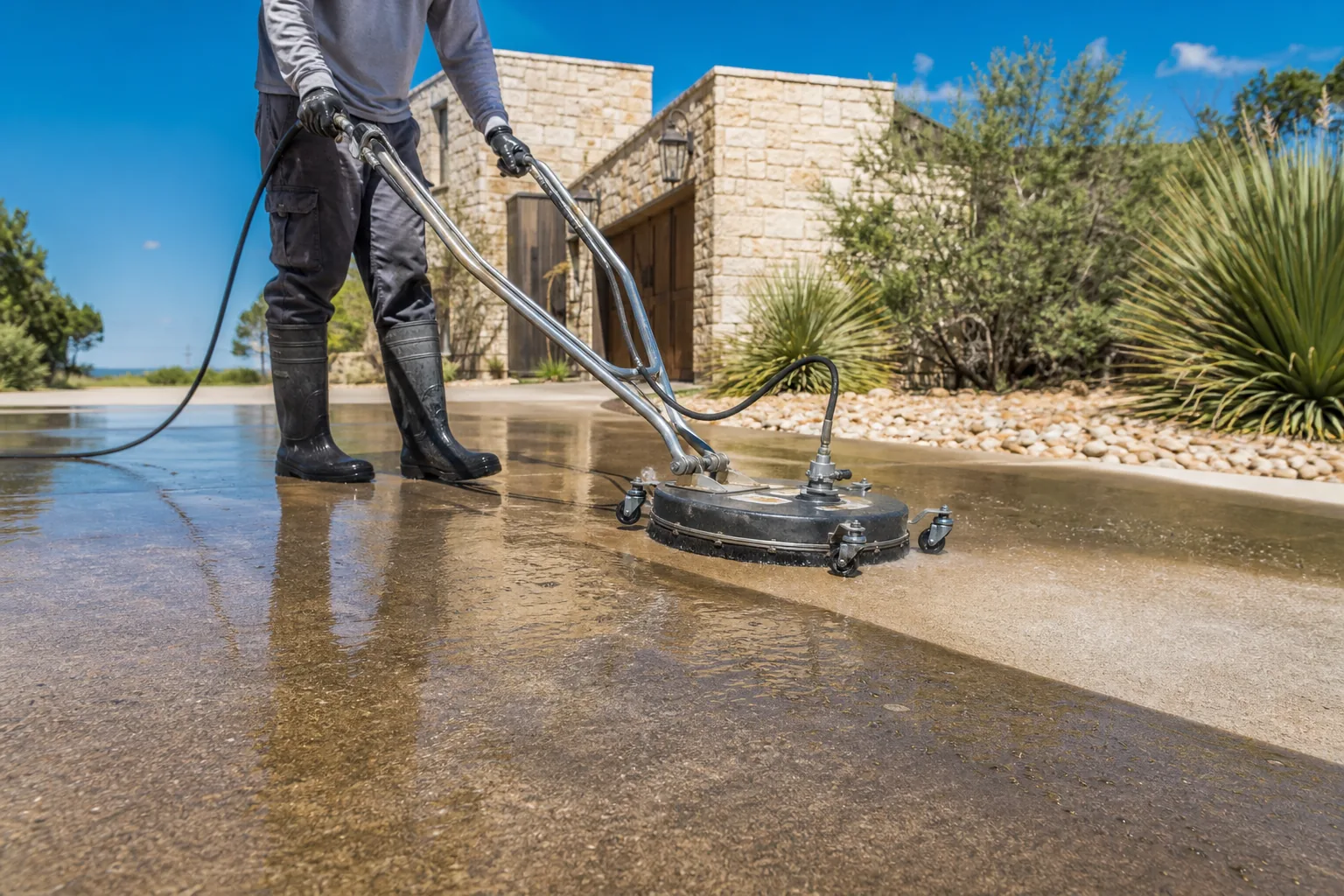
A typical process may include inspection, pretreatment, dwell time, even mechanical cleaning with a rotary surface cleaner, edge work, and a final rinse. The surface cleaner helps produce consistent passes and reduces the striping that a wand can leave when used unevenly.
Pressure, flow, nozzle height, and travel speed must match the slab. Newer or weak concrete, exposed aggregate, cracks, spalling, coatings, and previous etching can require a different approach. Cleaning reveals the material’s condition; it does not make damaged concrete new.
Soil and organic discoloration
Embedded dirt, dust film, many dark organic stains, and ordinary traffic grime often improve substantially. Pretreatment loosens the bond and helps produce a more uniform result. Shaded concrete near irrigation may need attention to the moisture source so discoloration does not return quickly.
Clay and fine West Texas soil can lodge in texture and joints. A thorough rinse and sensible runoff plan matter as much as the visible clean pass.
Oil, grease, and tire marks
Fresh oil should be absorbed and addressed promptly. Once petroleum penetrates concrete, degreasing can lighten it but may not remove the full shadow. Repeated leaks continually recharge the stain. Tire marks can combine heat, rubber compounds, sealer interaction, and surface abrasion; some are residue while others are a physical change.
Combining household cleaners can produce hazardous reactions, discolor concrete, damage nearby materials, and complicate professional treatment.
Rust, fertilizer, irrigation, and minerals
Rust-colored marks may come from metal furniture, irrigation, fertilizer, battery residue, or iron in water. These causes require different products and risk controls. Mineral deposits can also be white, gray, or crusty. Pressure alone often cleans around them without dissolving them.
Specialty treatment should be tested because concrete color, finish, age, aggregate, prior sealer, and nearby stone or metal can react. Severe deposits or chemical burns may be permanent.
Protect the result
- Repair vehicle and equipment leaks.
- Redirect irrigation away from drives and walks.
- Use pads beneath metal planters and furniture.
- Clean spills quickly without grinding them deeper.
- Discuss curing time before washing new concrete.
- Identify sealed, painted, or coated slabs before service.
If sealing is planned, ask the coating installer for their exact preparation and drying requirements. Cleaning can be one step in that system, but it is not a substitute for surface repair or coating preparation specified by the product manufacturer.
Ready to evaluate your drive, patio, or walkway?
Explore concrete cleaning